
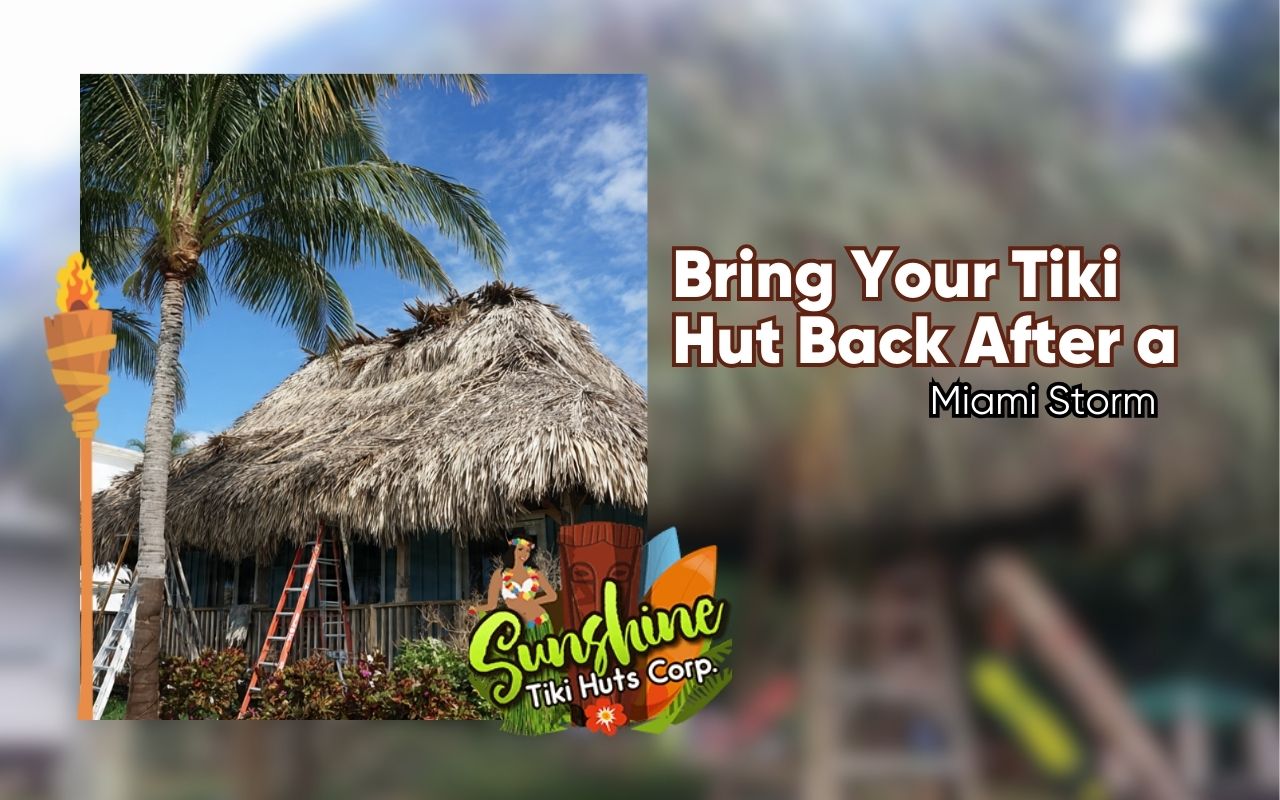
Surviving a Miami storm can feel stressful, especially for your tiki hut. After the wind and rain pass, fix damage fast so it does not get worse. Even a small thatch roof leak can grow into rot or mold. That is why Tiki hut repair after storm in Miami should start as soon as it is safe.
In this guide, you will learn what to check and what to fix first. From loose palm fronds to weak posts, these steps support smart post-hurricane repairs. When you need help, Sunshine Tiki Huts Corp can guide the next move and keep your retreat ready for sunny days.
Assess the Damage Before You Fix Anything
Start with a slow walk around the hut and look for clear signs of storm damage tiki hut issues. Check the roof edge, walls, posts, and floor. Then, look for missing thatch, leaning supports, and cracks. Because storms can shift materials, this early check makes Tiki hut repair after storm in Miami much easier.
- Inspect the roofline for gaps, lifted bundles, or torn edges.
- Check posts for cracks, soft spots, or wobble at the base.
- Look for puddles, stains, or damp areas on the floor.
- Scan joints and corners where movement often starts.
Next, document what you see. Take photos of broken fronds, split beams, and wet areas from leaks. Also, note what feels minor versus severe. This record helps your post-hurricane repairs stay organized. It can also help if you speak with Sunshine Tiki Huts Corp for next steps.
Fix Thatch Roof Leaks to Stop Water Damage Fast
For thatch roof leak repair, find the source of every drip. Use a flashlight and look for darker spots where moisture gathers. Even small leaks can cause mold and wood rot. So, treat them early to protect the frame and keep your space comfortable.
- Mark damp spots inside the hut to trace the leak line.
- Check the roof peak and overlaps where water can slip in.
- Remove damaged bundles that hold moisture and sag.
- Patch with fresh thatch and secure it with rust-resistant fasteners.
Work from the bottom up so water sheds the right way. After patching, test with a gentle hose spray to confirm the leak is gone. If you need a deeper fix, review roof options on tiki hut roof replacement. Sunshine Tiki Huts Corp can also recommend the best match for your structure and local weather.
Secure Loose Palm Fronds for a Tight, Clean Finish
After heavy wind, fronds can loosen and open gaps. That makes water entry easier and can invite pests. Tap each frond gently. If it shifts or rattles, it needs attention. In an emergency tiki repair Miami moment, a quick retie can prevent bigger loss.
- Remove old ties and clear out worn binding material.
- Retie with fresh twine using a tight figure-eight wrap.
- Replace broken fronds so the layer stays even and thick.
- Check edges and corners where wind usually lifts first.
For longer-lasting results, consider a full refresh using tiki hut reretching. It supports better coverage and can improve water shedding. If you want a pro plan for your roof, Sunshine Tiki Huts Corp can help you choose what fits your hut.
Strengthen Posts and Beams to Protect the Frame
Strong winds can stress posts and crossbeams, even when the roof looks fine. Check each support for cracks, splits, and soft areas near the base. Tap the wood lightly. Solid wood sounds clear, while damaged wood sounds dull. This step matters a lot during post-hurricane repairs.
If a beam is badly weakened, replace it with sturdy lumber that fits the structure. If it is still solid, add metal brackets and hurricane straps at key joints. Tighten hardware until snug, but do not over-tighten. For ongoing care that keeps these parts stable, explore tiki hut maintenance. Sunshine Tiki Huts Corp can also point out the joints that need the most support.
Clean, Seal, and Protect Surfaces for the Next Storm
Moisture, sun, and salt air wear down sealants over time. First, clean surfaces and remove peeling coatings. Then, let everything dry well before sealing. After that, apply an outdoor-grade sealant meant for wood in coastal air. This barrier helps reduce water entry and slows wear.
Also, think ahead for the next season. A smart prep plan lowers risk and speeds recovery after storms. For a practical checklist, read prepare your tiki hut for hurricane season in Florida. If you want a tailored approach, Sunshine Tiki Huts Corp can help align your hut with local weather patterns.
Remove Mold and Mildew to Keep the Hut Safe
Leaks and damp thatch can lead to mold and mildew. Wear gloves and a mask before cleaning. Use a mild vinegar mix or a gentle bleach solution on affected areas. Then, rinse and let it dry fully. Better airflow helps too, so keep the space ventilated on dry days.
Because roof layers can trap moisture, stay alert for repeat growth. If you are unsure about roof life or moisture risk, check how long does a thatched roof last. Sunshine Tiki Huts Corp can also advise when cleaning is enough and when replacement is smarter.
Frequently Asked Questions
How soon should I start repairs after a storm?
Start once it is safe to inspect. Early fixes stop small leaks and loose thatch from turning into bigger damage.
What are the first signs of a thatch roof leak?
Look for damp spots, darker roof areas, musty smells, or drip lines after rain. These often appear near overlaps.
Can I handle emergency repairs myself?
Small tie-downs and minor patches can be DIY. However, structural issues and major leaks usually need a specialist.
When should I consider a full thatch repair instead of patching?
If gaps keep returning or the roof feels thin, patching may not hold. Learn more at why thatch roof repair.
Who should I contact for professional help in Miami?
If damage is widespread or urgent, reach out through Sunshine Tiki Huts Corp contact page for guidance and scheduling.
Enjoy Your Restored Tiki Hut Again
Once repairs and upgrades are done, your retreat can feel calm again. With tight fronds, a dry roof, and steady posts, you can relax with more confidence. If you want support from inspection to finish, Sunshine Tiki Huts Corp can help keep your space strong through future storms. And when you need Tiki hut repair after storm in Miami again, you will know exactly what to check first.


