
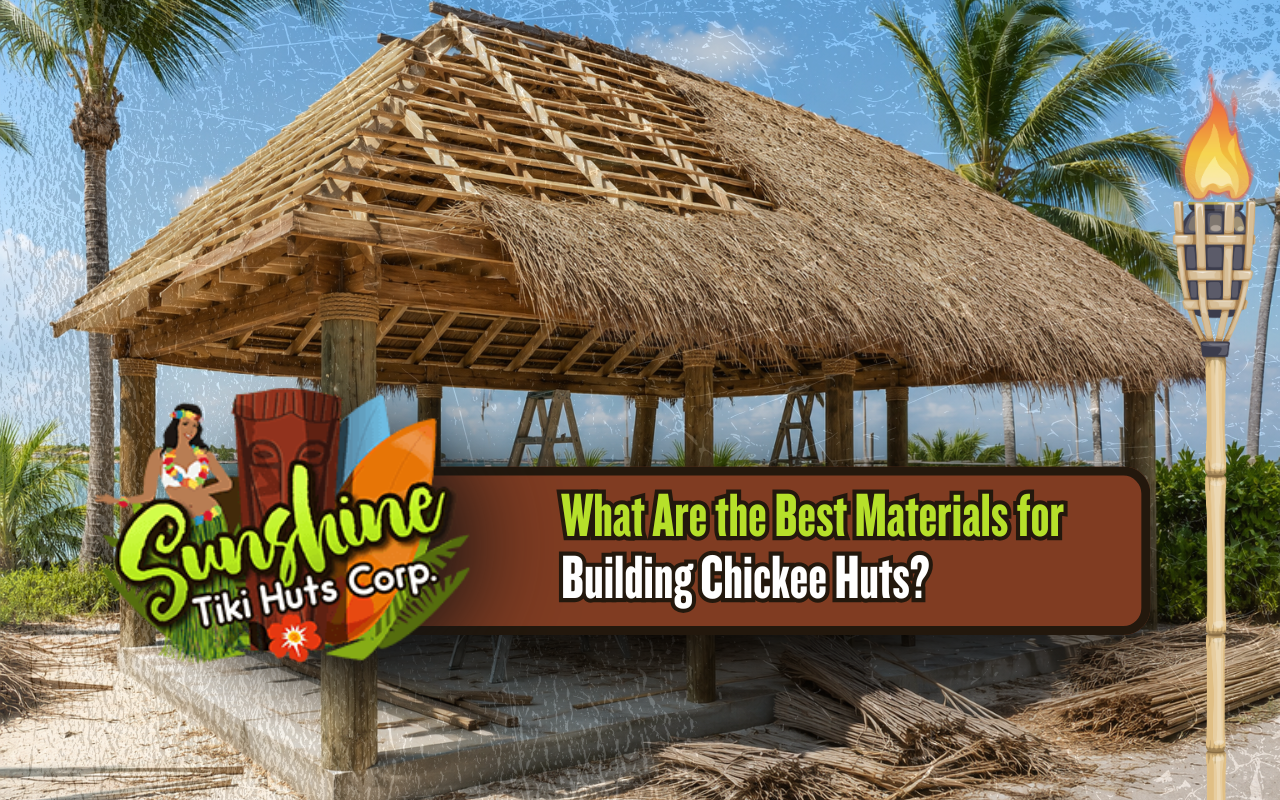
Choosing the right materials shapes how a chickee hut looks, feels, and performs outdoors. At Sunshine Tiki Huts Corp, we help clients compare natural roofing, strong support posts, and practical framing options before construction begins. You can also review what a chickee hut is before planning your project.
The best choice depends on the setting, desired style, local weather, and maintenance needs. A skilled team can match the roof and frame to the site while keeping the structure balanced, useful, and true to its tropical character.
Core Materials Used in Chickee Hut Construction
A traditional chickee hut combines an open wooden structure with a steep thatched roof. The main parts must work together, so builders consider the post size, beam strength, roof pitch, and thatch coverage before installation.
- Pressure-treated wood for posts, beams, and key supports
- Natural palm thatch for a classic tropical roof
- Quality fasteners suited for outdoor exposure
- Protective treatments selected for the local environment
These materials create the basic framework for many tiki hut designs. The final combination should support airflow, shade, and a clean roofline without adding details that weaken the structure or make future care difficult.
Why Pressure-Treated Wood Works Well Outdoors
Pressure-treated wood is a common choice for the posts and frame because it is made for outdoor conditions. It can resist moisture and decay better than untreated lumber when it is selected, cut, and installed correctly.
Our team at Sunshine Tiki Huts Corp considers the size and spacing of each structural member. Strong posts and properly placed beams help support the roof weight while keeping the hut stable. The wood should also be inspected for splits, severe warping, or weak sections before construction begins.
Natural Palm Thatch for an Authentic Roof
Natural palm thatch gives chickee huts their familiar texture and deep shade. When layered correctly, the palm fronds create a dense roof that supports airflow under the structure while helping direct rain away from the seating area.
- It creates a natural South Florida appearance.
- It allows warm air to move through the roof.
- It can be layered to improve shade and coverage.
- It works well with open-air outdoor living spaces.
Proper placement matters as much as material quality. A well-built roof needs consistent layers, a suitable pitch, and careful trimming. For regional context, see what a chickee hut is in Florida.
How Do Material Choices Affect Durability?
When asking what are the best materials for building chickee huts, durability should be part of the decision. Material quality influences how well the hut handles sun, rain, wind, and daily use. Poor choices can lead to loose roofing, uneven settling, or faster wear.
When you choose Sunshine Tiki Huts Corp, we evaluate how the location may affect the structure. Open yards, waterfront spaces, pool areas, and commercial settings can have different exposure levels. That information helps guide practical decisions about wood, fasteners, roof density, and future care.
Fasteners and Protective Treatments That Matter
Small components play a major role in the finished structure. Outdoor-rated fasteners should hold framing connections securely without creating avoidable weak points. Protective products may also be used when they fit the selected material and project needs.
- Use fasteners designed for exterior wood construction.
- Keep framing connections tight and correctly aligned.
- Choose treatments that suit the selected wood and thatch.
- Inspect connection points during routine maintenance.
Roof safety planning can include learning how to fireproof a thatched roof. Products should be selected carefully so they suit the roofing material and do not reduce its natural appearance.
Choosing a Tiki Hut Builder in Miami
A Tiki hut builder in Miami should understand tropical materials, roof shaping, and outdoor construction conditions. The builder should explain why each material fits the project instead of relying on one standard solution for every property.
With Sunshine Tiki Huts Corp, you can discuss the intended use, available space, and preferred appearance before work begins. Clear planning helps the roof, posts, and frame work as one system. You can also watch videos of the construction process to understand how the main parts come together.
Frequently Asked Questions
What are the best materials for building chickee huts?
The best materials usually include pressure-treated wood for the structure, natural palm thatch for the roof, and exterior-grade fasteners. The right combination depends on the site, design, and expected exposure to weather.
Is natural palm thatch better than synthetic roofing?
Natural palm thatch is often preferred for an authentic chickee hut appearance and open-air feel. Synthetic roofing may suit different design goals, but it does not create the same traditional texture. Review these tiki hut design options before deciding.
How long do chickee hut materials last?
Lifespan depends on material quality, installation, weather exposure, and maintenance. Regular roof checks, clean surroundings, and timely repairs can reduce avoidable wear. The site conditions should also guide how often the structure and roof are inspected.
Can chickee hut thatch be treated for fire safety?
Fire-safety options depend on the roof material and project requirements. It is important to use products that fit the thatch and follow suitable application guidance. Read about fire-retardant thatch for more information.
Does location change the materials a builder should use?
Yes. Wind exposure, moisture, nearby trees, salt air, and the planned use can affect material choices. A coastal or open site may need different planning than a sheltered yard. Property owners outside Miami can also review a tiki hut builder in Boca Raton.
Plan a Chickee Hut Built for Your Space
What are the best materials for building chickee huts? The answer starts with a strong wood frame, well-layered palm thatch, dependable fasteners, and choices that match the property. Each part should support comfort, shade, and a balanced finished look.
At Sunshine Tiki Huts Corp, we can help you plan the material mix around your space and design goals. Explore our construction videos to see the work in progress and prepare for a useful conversation about your hut.


