
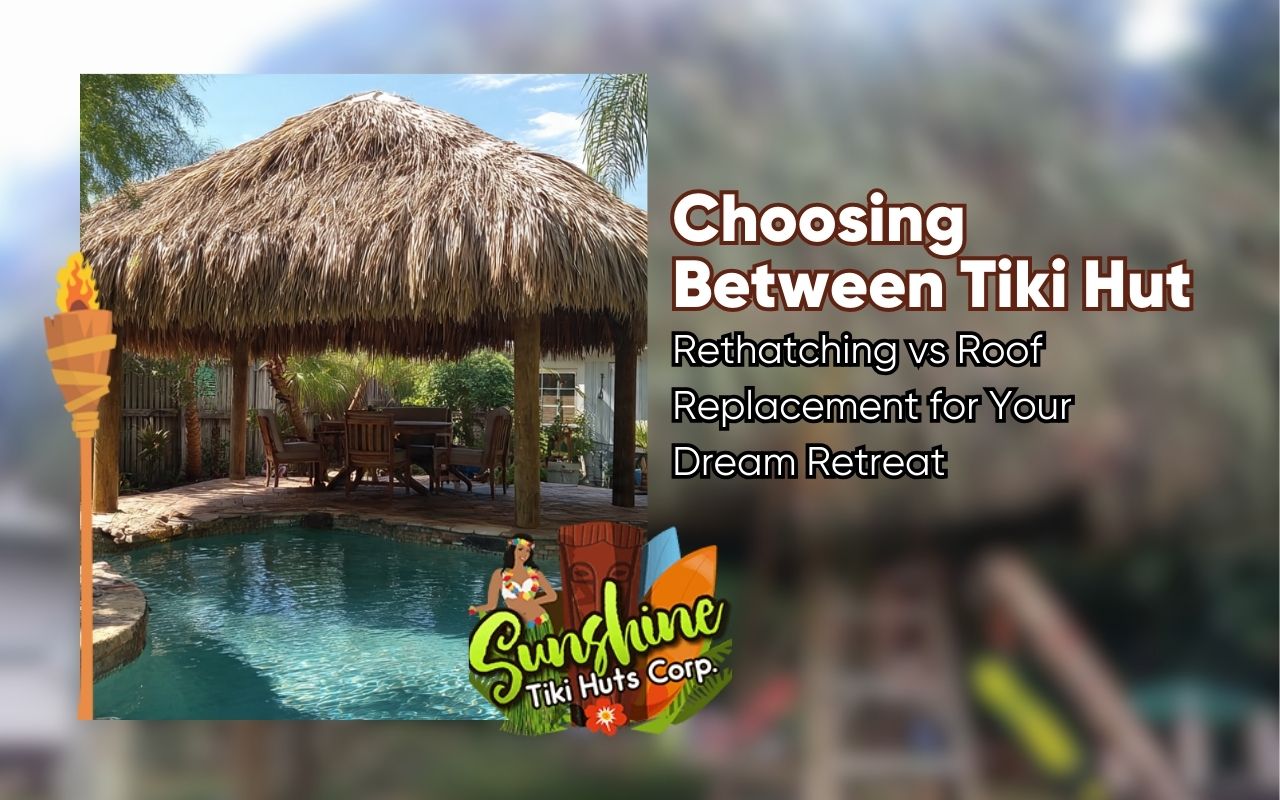
When planning tiki hut rethatching vs roof replacement, you want your outdoor space to feel like a true retreat. A tiki hut adds shade, comfort, and a relaxed island mood to patios, pools, and backyards. However, keeping that feeling alive means caring for the roof as weather, time, and use slowly wear down thatch.
Deciding what to do next can feel overwhelming, especially when the roof starts to look worn or leaky. This guide compares tiki hut rethatching vs roof replacement so you understand how each option affects budget, style, and upkeep. As you explore tiki hut roof repair options, you see how climate and palm thatch lifespan shape your decision.
Factors to Consider Before Making a Decision
Before you pick between tiki hut rethatching vs roof replacement, consider how you use the space. Also think about how long you want the structure to last and how it fits your backyard design. If you enjoy seasonal projects, ongoing care may feel fine, but a hands-off owner may prefer a durable upgrade.
- Long-term plans for the property and tiki hut.
- Available budget for immediate work and future upkeep.
- Desired look, from rustic natural thatch to clean modern lines.
- Exposure to sun, wind, and heavy rain, especially in coastal Florida.
- Access to licensed contractors who understand local rules and permits.
Local conditions and rules also matter, especially in hurricane-prone parts of Florida. Looking into thatch roof replacement Florida specialists helps you understand wind ratings, permits, and homeowner association guidelines. For a tailored plan, you can also contact our tiki hut team and review options before starting work.
Pros and Cons of Tiki Hut Rethatching
Rethatching focuses on refreshing the natural palm layer while keeping the main frame in place. It preserves the classic island look many owners love and can use eco-friendly, locally sourced leaves. Because materials are natural, tiki hut rethatching cost usually appears in smaller, recurring projects instead of one large, single upgrade.
Advantages of tiki hut rethatching
- Keeps the authentic, tropical appearance of palm thatch.
- Adds natural insulation that helps the space feel cooler in hot weather.
- Often takes less time than building a completely new roof.
- Allows you to repair only the most worn areas when the frame is still strong.
Disadvantages of tiki hut rethatching
- Requires regular inspections and light upkeep to prevent leaks.
- Natural fibers can fade, rot, or attract pests without proper care.
- Some insurers may charge more or set special conditions for thatched structures.
- Over many years, repeated work may cost more than a single, durable replacement.
Because maintenance needs can vary, it helps to have a trusted crew on call. Working with specialists in tiki hut roof repair and rethatching ensures the thatch is installed correctly and protected against sun, wind, and moisture.
Process of Tiki Hut Rethatching
The rethatching process usually starts with a careful inspection of the existing roof. A skilled team removes loose, damaged, or moldy thatch and checks the frame for rot or insect activity. When needed, they repair or replace weak rafters so the structure safely supports the new palm layers.
Next, fresh palm leaves or synthetic panels are layered in overlapping rows, starting from the bottom edge. Installers secure each bundle tightly to keep water shedding away from the interior. Finally, they trim and shape the roofline to improve drainage, create even coverage, and restore the hut’s clean, inviting profile.
Lifespan Expectancy of a Rethatched Tiki Hut Roof
Under good conditions, a freshly rethatched palm roof often lasts around five to eight years. Sun exposure, nearby trees, and how close you are to the coast all influence results. Heavy shade may trap moisture, while strong sun and salty air dry fibers faster and shorten palm thatch lifespan.
Regular care helps you reach the higher end of that range. Removing fallen leaves, tightening loose bundles, and scheduling periodic tiki hut roof repair visits keep the surface sound. In very humid or stormy locations, quick touch-ups after severe weather prevent small issues from turning into larger structural problems.
Benefits of Roof Replacement for Tiki Huts
Roof replacement gives you a fresh start when the structure or thatch is too worn for spot fixes. Modern systems, including synthetic thatch, metal, or wood, improve resistance to wind, rain, and fire. As a result, owners in exposed areas often gain more peace of mind and fewer emergency repair calls.
Another advantage is long-term consistency in both look and performance. Once installed, a well-designed replacement roof usually needs less frequent attention than natural thatch. This can free your time for hosting gatherings and enjoying the hut instead of constantly thinking about the next repair date.
Types of Materials Used in Tiki Hut Roof Replacement
When you explore new roofing, you will see several material choices, each with its own strengths. Synthetic thatch made from durable PVC or resin closely copies the look of palm leaves while resisting UV damage, mold, and rot. Many owners choose it to keep a tropical feel with less day-to-day care.
- Synthetic thatch panels – Offer a realistic thatch look with extended lifespan and low maintenance needs.
- Cedar shakes – Provide a warm, rustic style and work well in moderate climates with proper sealing.
- Metal roofing – Delivers excellent durability, fire resistance, and strong protection in high-wind zones.
- Hybrid designs – Combine synthetic thatch accents with a hidden metal core for both charm and strength.
Because each option performs differently, it is wise to review local codes and product ratings with experts. A dedicated tiki hut roof replacement and repair team can explain which materials suit your design, budget, and neighborhood requirements.
Cost Comparison: Rethatching vs Roof Replacement
Comparing expenses helps you see the full picture before committing to one path. In many cases, tiki hut rethatching cost starts lower because you reuse the frame and only refresh the thatch. However, these smaller projects repeat over time, especially in harsh coastal or hurricane-exposed locations.
By contrast, a full replacement usually means a larger initial project with stronger materials and longer warranties. When you compare tiki hut rethatching vs roof replacement over many years, replacement may prove more stable. This is especially true if storms, fallen branches, or pests often damage natural thatch in your area.
Long-Term Maintenance Considerations
Planning for maintenance keeps your tiki hut safe and inviting across seasons. For rethatched roofs, schedule regular visual checks, especially after strong wind or heavy rain. Look for thin spots, broken bundles, and signs of mold or insects so you can handle tiki hut roof repair early instead of waiting for leaks.
- Brush off leaves, branches, and debris that trap moisture.
- Trim nearby trees so limbs do not scrape the roof.
- Ask professionals to treat for mold, mildew, and pests when needed.
- Document repairs and inspections for insurance and future projects.
Replacement roofs also benefit from simple routines, though usually less often. Metal and synthetic systems stay in top shape when you rinse away salt and dirt, then check fasteners and sealants once a year. These small habits protect your investment and extend both structure life and roof performance.
Frequently Asked Questions
How do I know if my tiki hut needs rethatching or just small repairs?
Look for thin or bare patches, visible framing, or leaks during rain. If most of the thatch still looks healthy, targeted tiki hut roof repair may be enough. However, if wear appears across the entire surface, or the frame shows damage, a full rethatch or replacement is usually safer.
Is tiki hut rethatching cost always cheaper than getting a new roof?
Rethatching often starts with a lower invoice because you keep the existing structure. Over many years, though, repeating small projects can approach the price of one larger replacement. The best way to compare options is to request detailed estimates for materials, labor, and expected maintenance from an experienced tiki hut contractor.
How long does palm thatch usually last on a tiki hut?
In many Florida locations, well-installed palm thatch lasts around five to eight years with regular care. Shade, wind, and salt exposure can shorten or extend that range. Simple habits like clearing debris, treating pests, and scheduling inspections help maximize palm thatch lifespan and protect the frame underneath.
What roof materials work best for Florida storms and coastal weather?
Owners near the coast often look at synthetic thatch systems, metal panels, or reinforced wood designs. These options handle high winds and heavy rain better than aging natural thatch. Speaking with a thatch roof replacement Florida specialist helps you match product ratings, warranties, and style to your exact location.
Can I rethatch my tiki hut myself, or should I hire a professional?
Small touch-ups may seem manageable, but full rethatching is physically demanding and requires specific techniques. Incorrect overlap or fastening can lead to leaks, blow-offs, and wasted materials. Therefore, most owners rely on trained crews who understand local codes, safety rules, and manufacturer guidelines for both natural and synthetic systems.
Making the Right Choice for Your Dream Retreat
Balancing style, budget, and time for maintenance will ultimately guide your decision between tiki hut rethatching vs roof replacement. If you value authentic, natural materials and feel comfortable with regular care, rethatching can keep your hut charming and eco-friendly. If you prefer durability and less upkeep, a thoughtfully chosen replacement roof may fit better.
Either way, partnering with specialists helps you protect both the structure and the memories you create under it. You can schedule a personalized tiki hut consultation to review options and turn your outdoor retreat into a lasting escape.


