
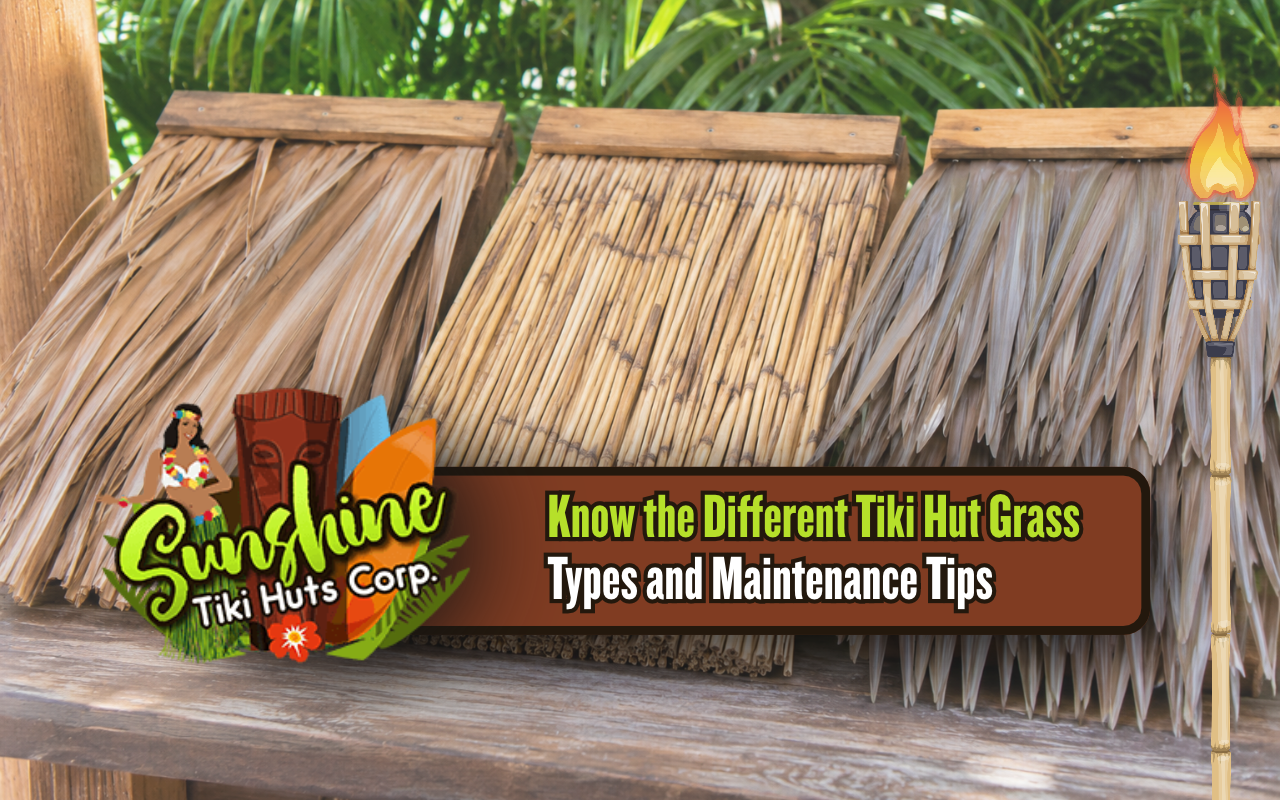
The roof is what makes a tiki hut a tiki hut, and the grass you choose decides how it looks and how long it lasts. If you want help comparing options, you can request a thatch estimate from our team.
Choosing the right tiki grass is one of the most important decisions in the project, because South Florida sun, salt air and summer rain test every roof.
What Are Tiki Huts Made Of?
Most tiki huts combine three parts: a wood frame, a roof deck and a layer of thatch on top.
- Posts and rafters, often pressure-treated pine or other durable wood
- A roof structure that supports the weight of the thatch
- Tiki grass or thatch, natural or synthetic, layered to shed water
The thatch is the part most people mean when they search for tiki grass, and it is the part that needs the most attention over time.
A well-built frame can outlast several thatch layers, so most long-term care focuses on the roof surface.
Types of Tiki Hut Grass and Thatch
Each material has its own look, lifespan and maintenance needs.
| Thatch type | Look | Strengths | Considerations |
|---|---|---|---|
| Mexican palm thatch | Classic, full and rustic | Authentic look, good shade | Needs sealing and periodic care |
| African reed thatch | Fine, tight and uniform | Dense layers, neat finish | Different style than palm |
| Tahitian thatch | Thin, layered panels | Lightweight and easy to install | Shorter lifespan in harsh sun |
| Synthetic thatch | Looks natural, holds color | Long lasting, low maintenance | Different feel up close |
| Palapa thatch | Traditional Mexican style | Strong shade and tropical feel | Heavier roof structure needed |
For a closer look at how each style shapes the finished roof, read our guide to popular tiki thatch styles.
What Is a Mexican Thatched Gazebo Called?
A Mexican thatched gazebo is usually called a palapa. Palapas use dried palm leaves over a wood frame and are common in Mexico, the Caribbean and South Florida. Many people use the words palapa and tiki hut interchangeably. If you love the palapa look, you can ask about thatch samples for your own hut.
Learn more about the material itself on our Mexican palm thatch roofing page.
Natural Tiki Grass Versus Synthetic Thatch
Natural thatch gives the most authentic texture and smell. It also changes color as it ages, from golden to silver-gray. Synthetic thatch keeps its color, resists mold and needs less upkeep, but costs more upfront in many cases.
Synthetic options are often treated to resist fire and fading during manufacturing, which makes them popular for restaurants, hotels and pool decks.
Many homeowners choose natural tiki grass for a classic look and synthetic thatch for commercial spaces or areas with heavy use.
Maintenance Tips for Tiki Hut Grass
- Inspect the roof every few months for thin spots and loose bundles.
- Remove leaves and debris that trap moisture on top.
- Trim plants and branches so they do not rub the thatch.
- Apply a thatch sealer to natural roofs to slow weathering.
- Reapply fire retardant on schedule, especially near grills.
- Check after storms for lifted or missing sections.
Fire safety is part of regular care. Our page on fire retardant thatch treatment explains how treatment protects the roof.
How Long Does Tiki Grass Last in South Florida?
Lifespan depends on the material, sun exposure, rain and maintenance. Natural thatch usually needs rethatching sooner than synthetic thatch, especially in direct sun near the coast. Huts in shade dry more slowly after rain, which can lead to mold if leaves pile up.
Our article on thatched roof lifespan factors covers what speeds up or slows down wear.
Signs Your Thatch Roof Needs Attention Soon
- Light showing through the roof from below
- Sagging, flattened or loose bundles
- Gray, brittle thatch that breaks when touched
- Leaks or drips during heavy rain
- Mold or dark patches in shaded areas
At Sunshine Tiki Huts Corp, we often find that small repairs caught early add years to a roof. A quick inspection after hurricane season is one of the best habits for any owner.
Thatch Installation and Repair in South Florida
With more than 16 years of experience, our licensed and insured team installs and repairs natural and synthetic thatch for homes and businesses from Homestead to West Palm Beach. At Sunshine Tiki Huts Corp, we help you choose the right tiki grass for your budget, style and exposure.
At Sunshine Tiki Huts Corp, our crews also apply sealers and fire retardant, so your new roof starts protected. Every project includes care tips for the first year.
Frequently Asked Questions
What is tiki grass made of?
Natural tiki grass is usually dried palm leaves or reeds. Synthetic versions are made from durable plastic fibers.
Is synthetic thatch better than natural?
It lasts longer and needs less care, while natural thatch has a more authentic look.
How often should tiki grass be treated?
Sealer and fire retardant schedules depend on the product. Ask your installer for a care plan.
Can tiki grass be repaired instead of replaced?
Often, yes. Small damaged areas can be patched if the rest of the roof is healthy. Large worn areas usually need rethatching.
Do you offer free estimates?
Yes. We are available Monday to Sunday, 6:00 AM to 10:00 PM, and estimates are free.
Choose the Right Roof for Your Tiki Hut
The best tiki grass is the one that matches your style, exposure and how much care you want to give it. With the right material and regular maintenance, your roof will stay full and beautiful for years.
Call (786) 255-6529 or get your thatch quote today.


